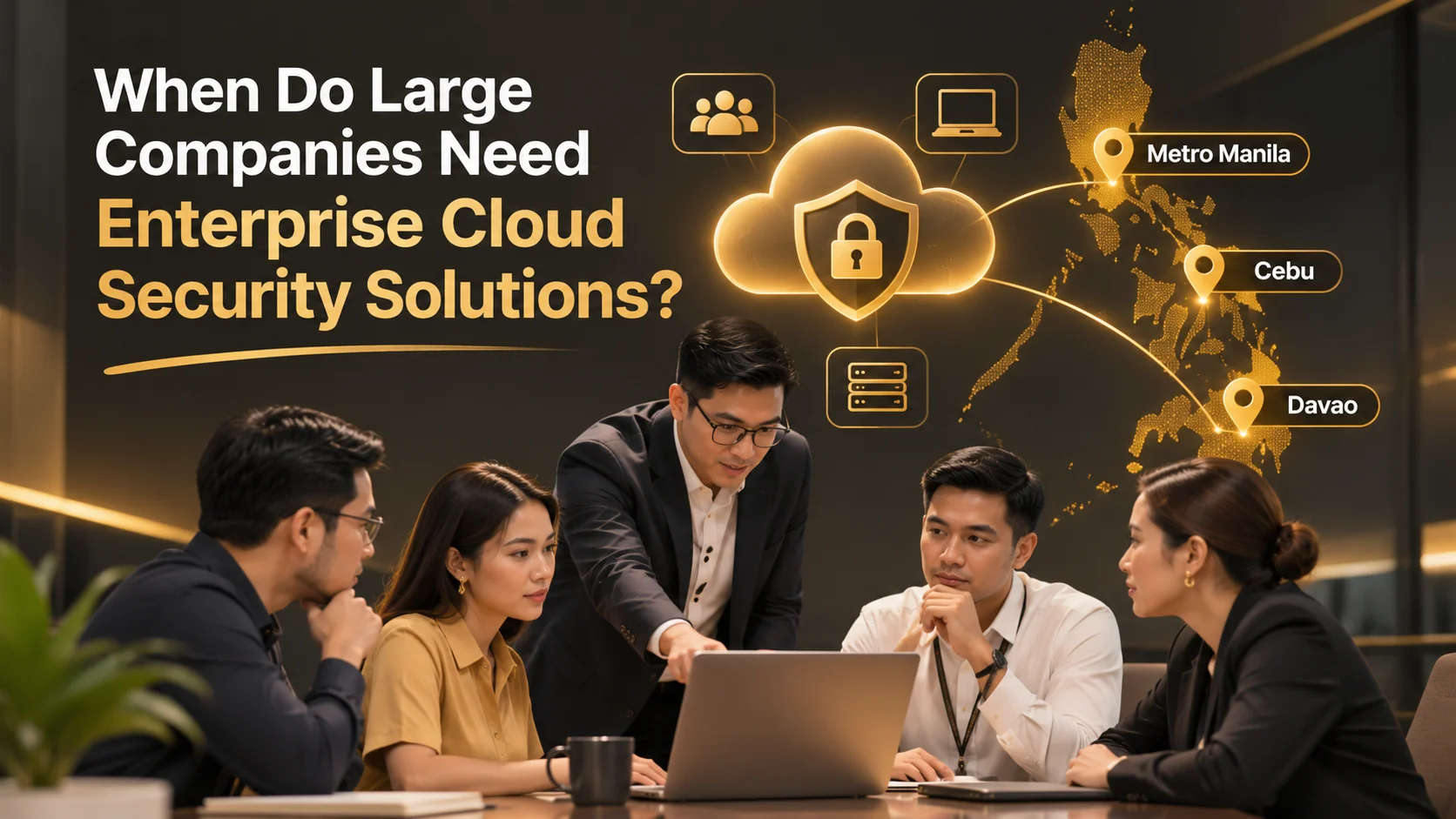
Managing cloud security for a company with 200 employees is different from managing it for an organization with 5,000 employees across multiple locations.
Consider a BPO company with offices in Metro Manila, Cebu, and Davao. Employees access cloud applications daily, while separate IT teams manage infrastructure, user accounts, and cybersecurity.
Each team may be doing its job, but who ensures security policies are consistently applied across the entire organization?
This is when enterprise cloud security solutions become worth evaluating.
At Top Cloud Solutions, we believe the need for stronger cloud security depends on your infrastructure complexity, business risks, and ability to manage existing controls, not employee count alone.
When Should Large Companies Consider Enterprise Cloud Security Solutions?
Having 1,000 or even 10,000 employees doesn’t automatically mean your organization needs a new security platform.
The question is whether your existing tools, policies, and IT teams can still manage cloud security effectively as operations expand.
Here are four situations worth examining.
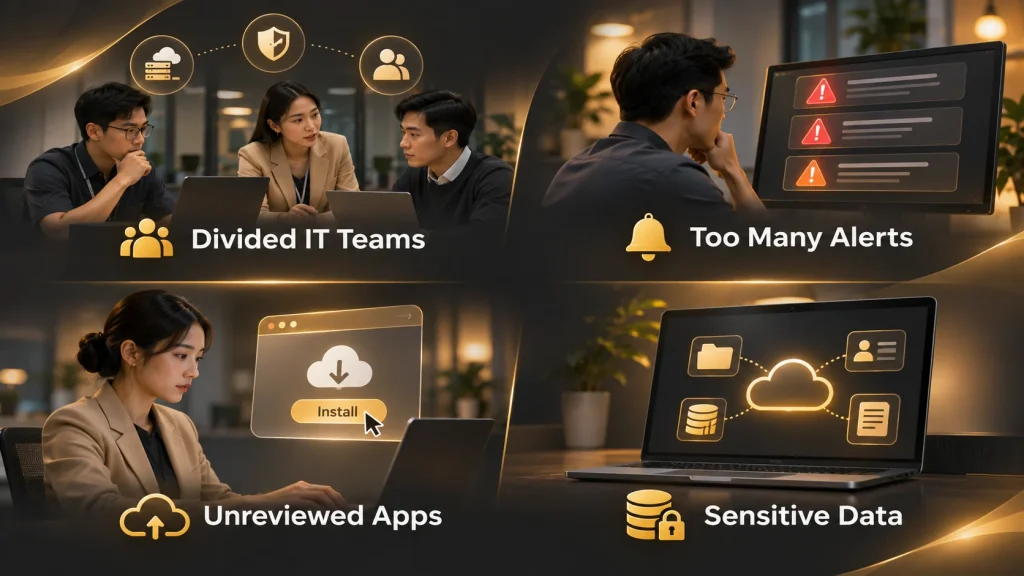
1. Security Responsibilities Are Divided Across Multiple IT Teams
Large Philippine companies often have separate teams responsible for cloud infrastructure, cybersecurity, applications, and user access.
However, problems can arise when responsibilities overlap or security issues fall between teams.
For example, one department may identify an exposed cloud resource but assume another team is responsible for fixing it.
Without clear ownership, the issue could remain unresolved despite being detected.
What to evaluate: Does your organization have defined responsibilities for identifying, assigning, resolving, and verifying cloud security issues?
For enterprises, centralized oversight doesn’t necessarily mean one team handles everything. It means everyone understands who is accountable for each security decision.
2. Your IT Team Cannot Prioritize Cloud Security Findings
A company operating several cloud platforms may receive security alerts from different monitoring tools.
The challenge isn’t always detecting problems. It’s determining which findings deserve immediate attention.
This is where cloud security posture management (CSPM) can help identify misconfigurations, exposed resources, and policy violations across supported cloud environments.
However, discovering hundreds of findings doesn’t mean every issue carries the same risk.
For example, publicly accessible storage containing customer information may require urgent action, while a lower-risk configuration issue could be addressed through scheduled maintenance.
What to evaluate: Can your IT team prioritize findings based on exposure, affected systems, data sensitivity, and business impact?
A reliable process should also confirm that corrective actions actually resolved the identified weaknesses.
3. Cloud Applications Are Deployed Faster Than Security Reviews
Imagine a Philippine company with thousands of employees across HR, finance, sales, and customer support.
Each department may request cloud applications to improve its daily operations.
Problems arise when applications are deployed before IT teams understand what information they process or how they connect with existing systems.
For instance, a customer service team may introduce a reporting application that requires access to customer records.
Before approving the integration, the organization should determine which data will be shared, who can access it, and whether the application meets internal security requirements.
What to evaluate: Are security reviews part of your software procurement and deployment process?
When applications are introduced faster than security teams can assess them, your organization may need stronger governance and approval controls.
4. Sensitive Business Data Is Spread Across Multiple Systems
Large organizations often manage customer records, employee information, financial documents, and operational data through different cloud platforms.
For industries such as BPO, finance, and healthcare, protecting this information requires more than installing security software.
Under the Philippines’ Data Privacy Act of 2012, organizations processing personal information must implement appropriate organizational, physical, and technical safeguards.
However, cloud security tools alone do not establish regulatory compliance.
Your IT and compliance teams should understand where personal information is stored, who can access it, and which third-party providers process it.
What to evaluate: Can your organization identify sensitive data across its cloud environment and demonstrate how access and security controls are managed?
What Should Enterprise Cloud Security Solutions Actually Address?
Before purchasing additional security tools, assess whether your organization already has the capabilities needed to manage cloud risks consistently.
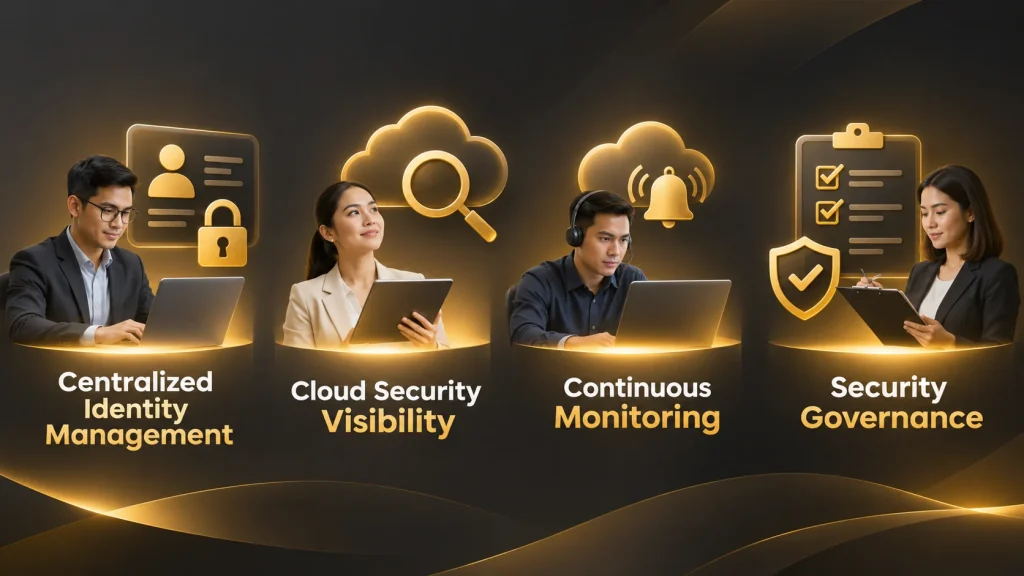
For cloud security for large businesses, four capabilities deserve particular attention:
- Centralized Identity Management: Consistent access permissions, multi-factor authentication, and timely removal of unnecessary privileges.
- Cloud Security Visibility: An accurate inventory of cloud resources, configurations, and identified risks.
- Continuous Monitoring: Processes for detecting suspicious activity, investigating alerts, and assigning response responsibilities.
- Security Governance: Clear accountability for approving changes, addressing findings, and verifying corrective actions.
These capabilities should complement existing infrastructure rather than create more disconnected systems.
For companies managing integrated cloud and on-premises environments, our guide to hybrid cloud security solutions discusses additional security considerations.
How Can Your IT Team Decide Whether It’s Time to Upgrade?
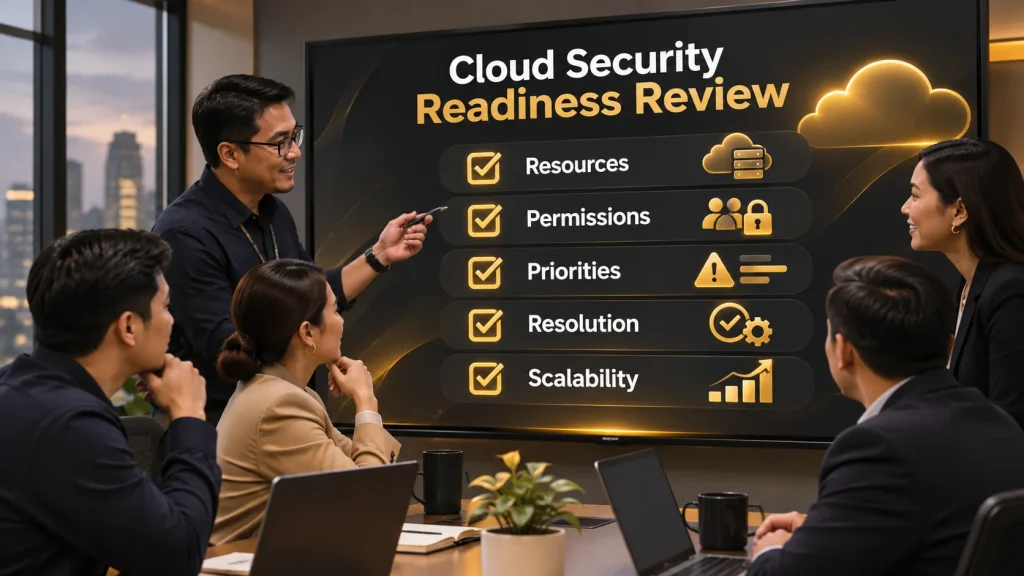
Before investing in another enterprise security platform, review how effectively your existing controls operate.
Ask your IT and security teams:
- Can we identify our cloud resources and who is responsible for them?
- Are access permissions reviewed consistently across departments?
- Can we prioritize security findings based on business impact?
- Do we verify whether identified issues have been resolved?
- Can our current processes support additional applications, users, and locations?
If several answers are unclear, consider reviewing your existing security architecture and processes before selecting new technology.
The goal isn’t to purchase more tools. It’s to establish security controls your organization can consistently manage as it grows.
Explore Enterprise Cloud Solutions With Top Cloud Solutions
At Top Cloud Solutions, we understand that managing cloud infrastructure becomes more complex when businesses operate across multiple departments, applications, and locations.
We help Philippine organizations explore cloud infrastructure, migration, and optimization solutions based on their existing systems and operational requirements.
Whether you’re expanding cloud operations or reassessing your current environment, our team can help you plan the next steps toward a more manageable cloud setup.
Is your cloud environment becoming harder to manage? Connect with Top Cloud Solutions to discuss your infrastructure requirements and explore solutions suited to your organization.
 ] A huge thank you to everyone who joined our
