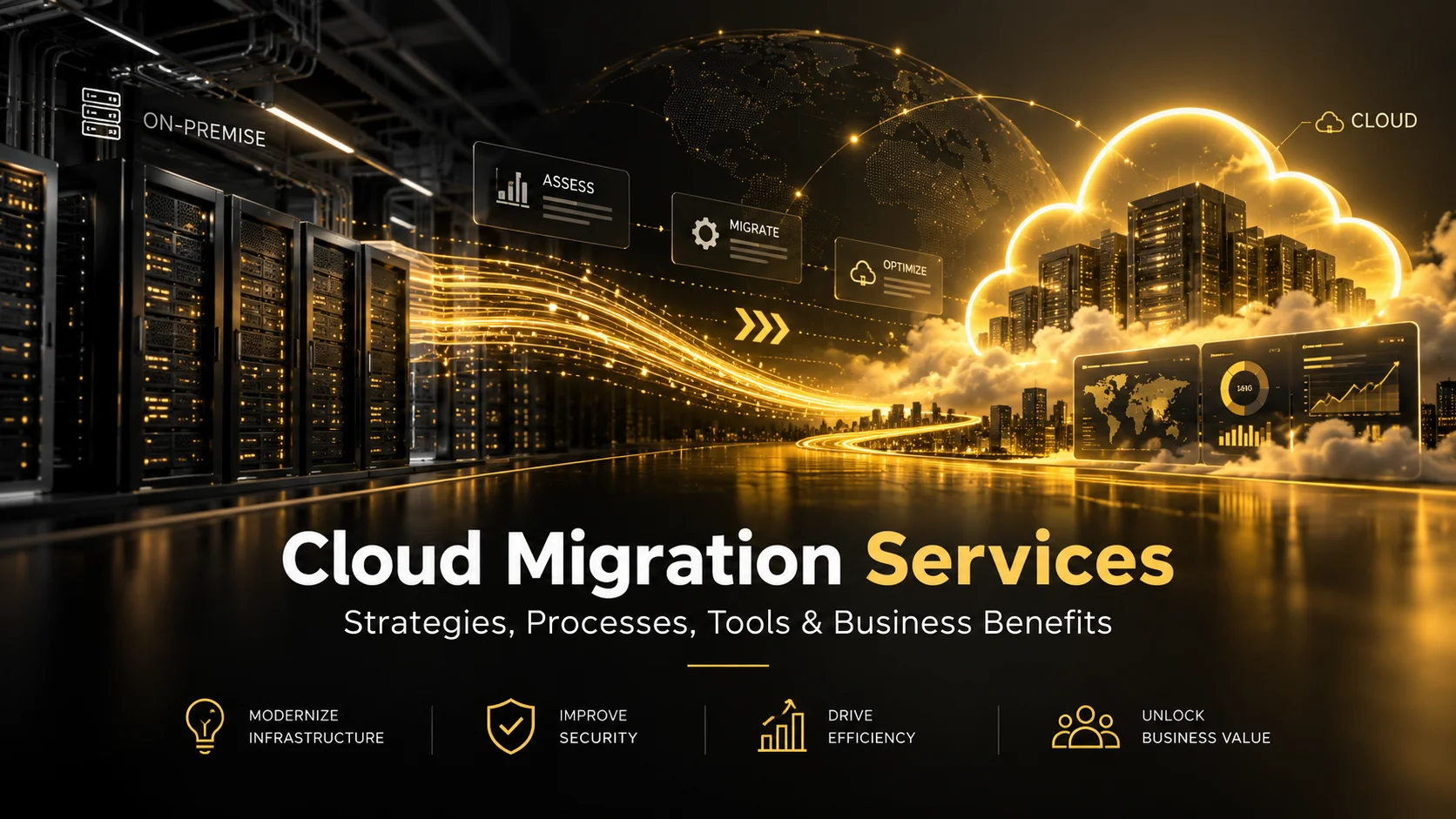
Your business servers are running, applications are working, and employees can access the systems they need. So, is moving to the cloud really necessary?
Not every business needs to migrate immediately. However, as operations grow, existing infrastructure may become harder to maintain, upgrade, or scale.
Cloud migration services help businesses assess their current systems, plan cloud transitions, and move applications or data while managing potential risks.
For businesses in the Philippines, understanding the available strategies, processes, and tools is an important first step toward making practical cloud decisions.
What Are Cloud Migration Services?

Cloud migration services involve moving applications, databases, servers, or workloads from existing infrastructure to a cloud environment. Migration can also involve transferring resources between different cloud platforms.
The process goes beyond moving files. Businesses need to consider application compatibility, security, operational requirements, and ongoing management.
This is where cloud migration consultants can help. They assess infrastructure, recommend migration approaches, and support the transition to minimize potential disruptions.
The goal is not simply to move everything online. It is to establish a cloud environment that meets actual business needs.
Is Cloud Migration Worth It If Your Current Infrastructure Still Works?
A functioning IT environment does not automatically need replacing.
If your existing systems meet performance requirements, remain secure, and are affordable to maintain, keeping them may be the more practical option.
However, migration may be worth exploring when your business experiences:
- Increasing hardware maintenance and replacement costs.
- Limited storage or computing capacity.
- Difficulties supporting business expansion.
- Growing disaster recovery requirements.
- Applications that need modernization or better integration.
For example, a Philippine business planning to open additional branches may need more flexible access to applications and shared data.
Instead of immediately replacing its entire setup, the business can evaluate how cloud infrastructure solutions could support its changing requirements.
Cloud migration should solve an existing problem or support a clear business objective, not simply follow a technology trend.
What Are the 7 Rs of Cloud Migration?
Businesses do not have to migrate every application using the same approach.
The 7 Rs of cloud migration provide a framework for deciding which systems to move, modify, replace, retain, or retire.
| Strategy | What It Means |
| Rehost | Move an application to the cloud with minimal changes, often called lift and shift. |
| Replatform | Make limited improvements to an application during migration. |
| Refactor | Redesign an application to better use cloud-native capabilities. |
| Repurchase | Replace existing software with another product, often a SaaS application. |
| Relocate | Move compatible infrastructure to a cloud environment without major redesign. |
| Retain | Keep an application in its current environment. |
| Retire | Remove systems that are outdated or no longer needed. |
For example, a business may rehost an existing application while retaining another system that is too costly to migrate.
Choosing the right strategy depends on application requirements, migration costs, operational risks, and long-term business goals.
What Are the Core Phases of Cloud Migration?
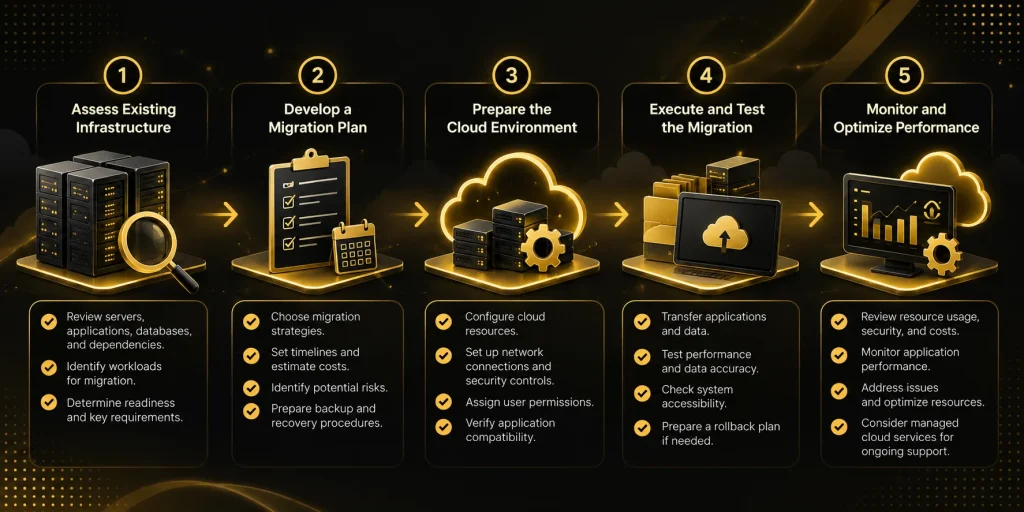
A successful migration requires preparation before any applications or data are transferred.
Although the process varies depending on infrastructure complexity, most migrations involve five core phases.
1. Assess Existing Infrastructure
Review your current servers, applications, databases, and system dependencies.
Identify which workloads need migration, what problems the move should address, and whether your infrastructure is ready.
2. Develop a Migration Plan
Choose appropriate migration strategies, establish timelines, estimate costs, and identify potential risks.
Businesses should also prepare reliable cloud backup solutions and recovery procedures before transferring important information.
3. Prepare the Cloud Environment
Configure cloud resources, network connections, security controls, and user permissions.
Check whether existing applications will function properly in the destination environment.
4. Execute and Test the Migration
Transfer applications and data according to the migration plan.
Test application performance, data accuracy, and system accessibility before completing the transition. A rollback plan can help if serious issues arise.
5. Monitor and Optimize Performance
After migration, review resource usage, security, operating costs, and application performance.
Businesses may consider managed cloud services to support ongoing monitoring, maintenance, and optimization.
Top Cloud Migration Providers and Platforms
Choosing a cloud platform depends on your business applications, technical requirements, and budget.
Several cloud providers offer migration tools and infrastructure services for different business needs.
Amazon Web Services (AWS)
AWS offers cloud infrastructure, storage, databases, and migration tools for businesses with different workload requirements.
Microsoft Azure
Azure supports infrastructure and application migration, particularly for organizations working with Microsoft technologies and hybrid environments.
Google Cloud
Google Cloud provides computing infrastructure, analytics capabilities, and services for migrating supported databases and workloads.
Huawei Cloud
Huawei Cloud offers computing, storage, networking, and database services for businesses exploring cloud migration and infrastructure modernization.
Tencent Cloud
Tencent Cloud provides cloud infrastructure, database services, and migration capabilities for businesses managing applications and digital operations.
There is no single platform suitable for every organization. Businesses should compare compatibility, security requirements, operating costs, and available technical support before choosing a provider.
At Top Cloud Solutions, we collaborate with these technology providers to help businesses explore cloud platforms, evaluate their options, and find solutions that align with their infrastructure and operational needs.
For a broader understanding of available technologies, explore how different cloud computing solutions support business operations.
Which Tool Is Best for Data Migration?
The best data migration tool depends on what you need to transfer and where the information will be stored.
Some commonly used options include:
| Tool | Primary Purpose |
| AWS Database Migration Service | Migrating supported databases to AWS |
| Azure Migrate | Assessing, planning, and migrating supported workloads to Azure |
| Google Cloud Database Migration Service | Migrating supported databases to Google Cloud |
| AWS DataSync | Transferring file and object data between supported storage environments |
These tools have different purposes and are not interchangeable.
Before choosing one, consider data volume, source compatibility, transfer requirements, acceptable downtime, and security controls.
For complex migrations, professional assessment can help businesses avoid selecting tools that do not match their infrastructure.
How Can Cloud Migration Consultants Help Your Business?
Even with available migration tools, moving business systems can introduce challenges involving compatibility, downtime, security, and unexpected costs.
Cloud migration consultants help businesses understand these risks before beginning the transition.
Their support may include evaluating migration readiness, selecting suitable platforms, developing migration plans, coordinating testing, and reviewing post-migration performance.
For Philippine businesses without a dedicated cloud engineering team, professional guidance can make complex technical decisions easier to manage.
Beyond the initial transition, broader cloud solutions services can help organizations maintain and improve their cloud environments as operational needs change.
Plan Your Cloud Migration With Top Cloud Solutions
Cloud migration is not about moving every system as quickly as possible. It is about determining what your business needs, what should change, and which approach offers practical long-term value.
At Top Cloud Solutions, we help Philippine businesses evaluate their infrastructure, plan cloud transitions, and improve cloud environments based on their operational requirements.
Whether you are considering your first migration or reviewing an existing setup, understanding your options is the right place to start.
Contact Top Cloud Solutions to discuss your cloud migration requirements and explore an approach that fits your business.
 ] A huge thank you to everyone who joined our
